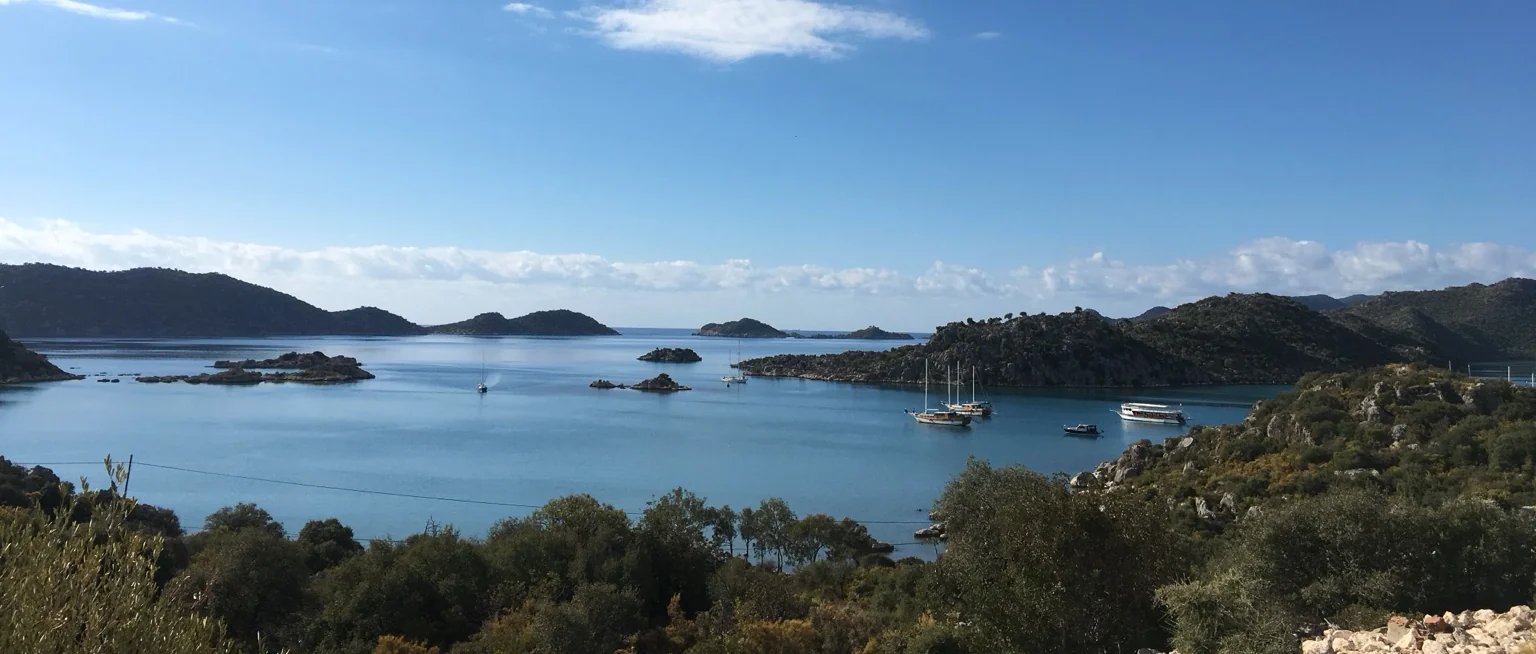
Kekova: a coastline best understood from the water
Kekova lies east of Kaş, around the sheltered bays near Üçağız and Kaleköy. Boats pass rocky islands, small inlets and archaeological remains that tell the story of settlements shaped by the sea. The best-known stretch is the so-called Sunken City, where parts of an ancient coastal settlement can be seen from the boat.
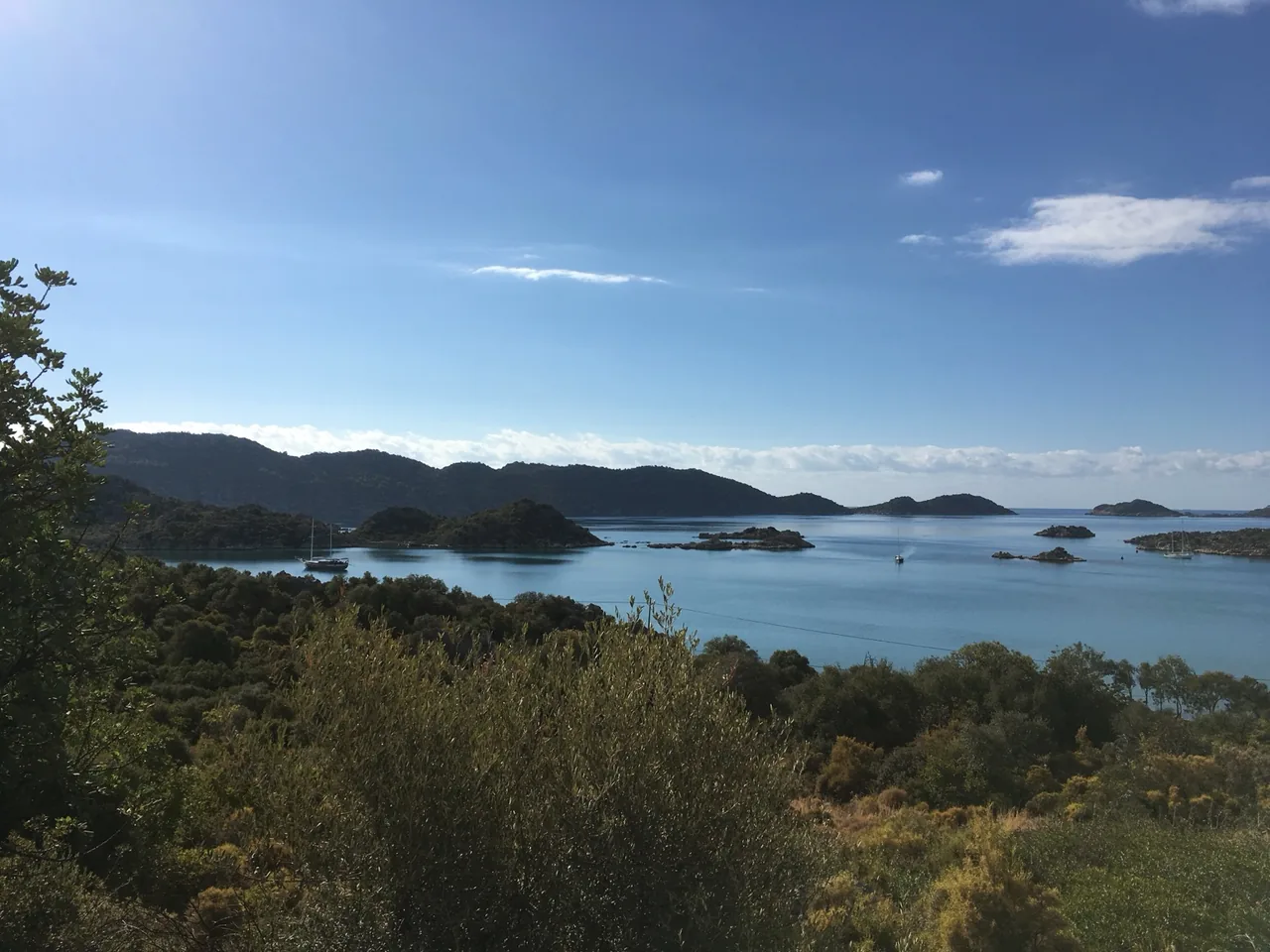
What to see on a Kekova trip
The remains are viewed from the water; boats pass through the protected archaeological area rather than stopping for a swim among the ruins. Steps and masonry near the shoreline are visible when conditions allow. A guide can help distinguish the surviving structures from the natural rock.
Kaleköy and ancient Simena.
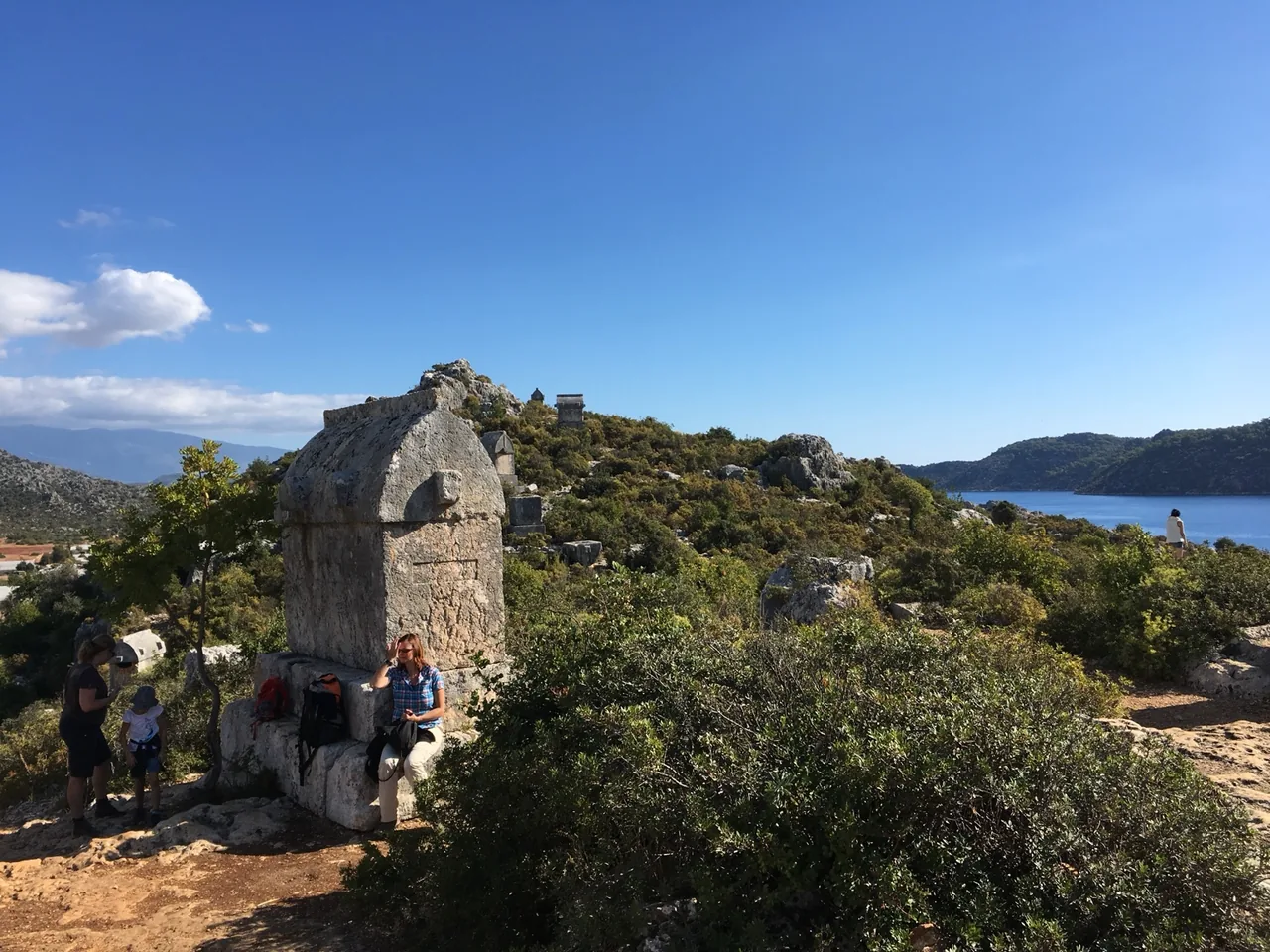
Kaleköy is a small waterfront settlement beneath the remains of Simena's castle. It is commonly reached by boat, although there is also a walking approach. From the higher ground, the view opens across the islands and the bays. Look for Lycian sarcophagi, including examples close to the shore.
Üçağız: a practical starting point.
Üçağız is a useful departure point for boat trips and sea-kayaking excursions. From Kaş, you can also join organised boat tours that visit the wider Kekova area. Check the departure harbour, route, duration, included meals, landing arrangements and swimming stops before booking; itineraries differ between operators. Services may be less frequent outside summer.
Planning a visit from Kaş
A boat trip is the easier choice for a mixed group or anyone who wants several swimming stops. Kayaking brings you closer to the water but requires some effort and is best arranged with a local operator who understands the protected zones and prevailing conditions. Neither option allows unrestricted access to the archaeological remains.
In summer, take drinking water, sun protection and a hat. Outside the main season, departures may be fewer; swim only where it is permitted.
A shipwreck nearly 4,700 years old: a discovery off Kekova
Most visitors know Kekova for the remains of the Sunken City, viewed from passing boats. Yet a discovery off the island takes the story of this coastline much further back. In 2024, researchers from Akdeniz University documented the cargo of an Early Bronze Age vessel. Initial comparisons of its pottery suggest a date of around 2700–2400 BC, approximately 4,400–4,700 years ago.
The wooden hull has not survived, but pottery vessels remain on the seabed, including distinctive flat-based containers with two side handles. Their shapes resemble examples from the eastern Mediterranean, particularly the Levant. Three stone anchors were also recorded nearby, although it is not yet clear whether all belonged to the same ship. Two pottery vessels were recovered for closer study, one in 2024 and another in 2025.
The find offers a rare opportunity to investigate trade and seafaring between Mediterranean shores at a remarkably early date. The precise origin of the cargo, the vessel's route and its final dating are still under investigation. Researchers have raised the possibility that it could be among the oldest shipwrecks yet identified, but that remains a provisional assessment rather than a settled record.
Crucially, this is not the Sunken City site seen on the usual Kekova boat trips, nor should visitors expect to see the wreck during an ordinary excursion. The shipwreck predates the later Lycian settlements of the area by many centuries.
The discovery is described in a 2026 scientific paper by Hakan Öniz and Ceyda Öztosun: Preliminary Report on the Early Bronze Age Shipwreck in the Kekova Region of Antalya.
Exploring more of Lycia
For a land-based counterpart, explore Myra, Andriake and Demre. If you are based in Kaş, our day trips guide offers ideas for fitting Kekova into a wider stay. For the historical background, see Lycia and the Lycian Coast.
Choosing a Kekova excursion responsibly
The Sunken City is a protected archaeological site. Sightseeing boats normally pass the remains without stopping to swim among them; follow the captain's instructions and the current rules of the protected area. Do not touch, remove or disturb archaeological material. Swimming stops take place in permitted bays, not among the ruins.
Decide whether you want a boat trip from Kaş or a shorter departure from Üçağız. Compare the time spent travelling, the actual swimming stops, lunch arrangements and whether Kaleköy is included. Kaleköy's lanes and the approach to the castle involve uneven ground and steps. A sea-kayaking trip is a separate, more active option and depends on the operator and conditions.
The Bronze Age wreck: what is known and what is not
Research on a very early Bronze Age wreck off the Kekova coast has attracted attention, with a proposed date around 2700–2400 BCE. Archaeological interpretation and precise dating remain under study; describing it unconditionally as the world's oldest shipwreck would be premature. It is not an ordinary sightseeing or diving attraction. For wider regional context, see Lycia and the history around Kaş.