Patara combines one of ancient Lycia’s most important cities with a long sandy Mediterranean beach. It is one of the clearest places on the coast to see how archaeology, landscape and the sea belong to the same story.
Why Patara matters
Ancient Patara was a major Lycian city and an important harbour. The archaeological area includes monumental remains spread across a broad landscape rather than a single compact ruin, so it rewards a slower visit.
Patara is also associated with the Lycian League and with St Nicholas, who was born in the region before becoming bishop of Myra. These different layers make the site useful for understanding both ancient Lycia and the later history of the coast.
The archaeological site
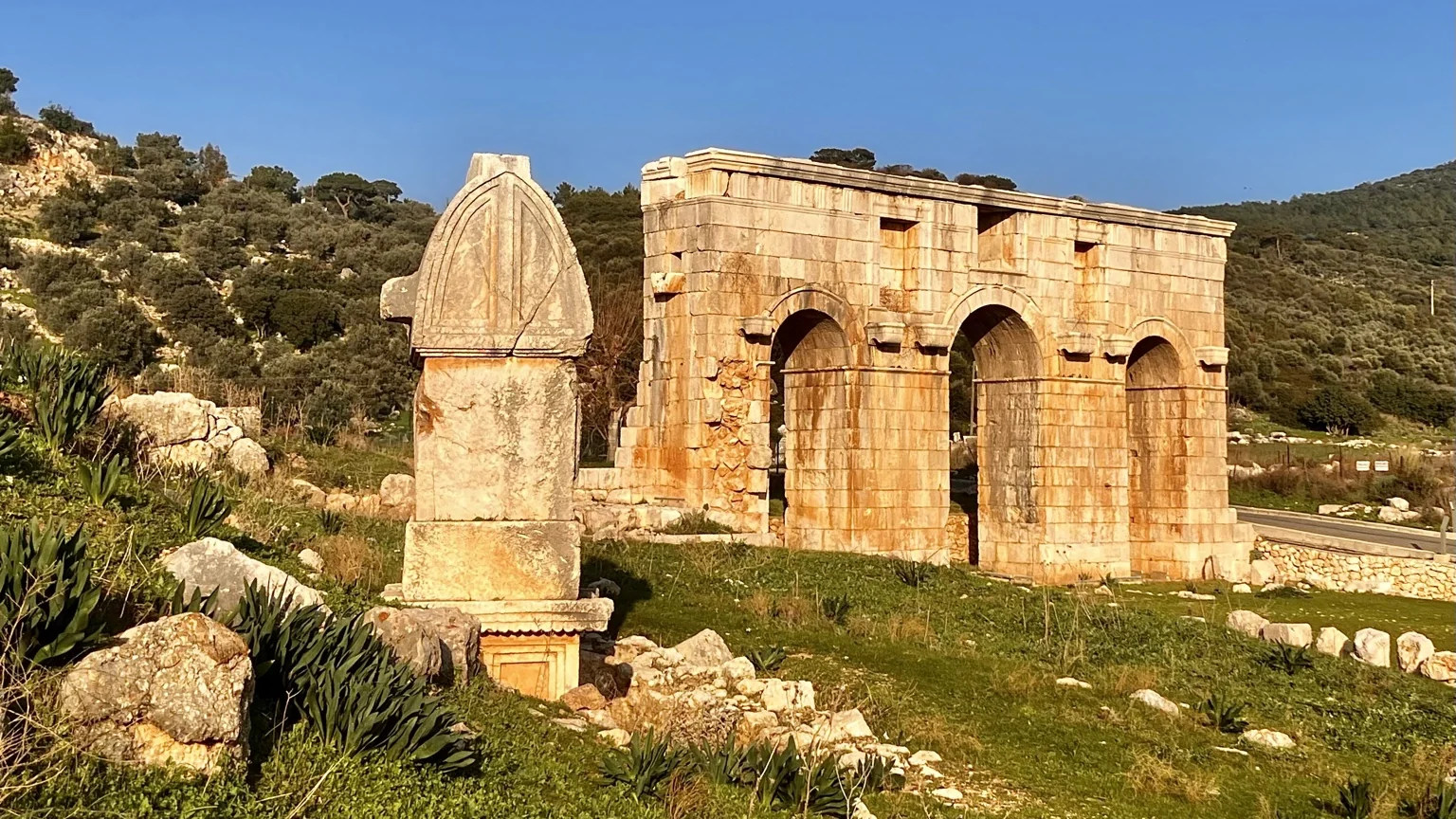
The theatre, assembly building, monumental gate and other remains are connected by paths across the former city. The ancient harbour has changed dramatically as the coastline silted over, which helps explain why the ruins now sit behind dunes and wetlands rather than directly on an active harbour.
Patara Beach
Beyond the ruins lies one of the region’s longest sandy beaches. Archaeology and beach time can therefore be combined, but access arrangements and protected-area rules may change seasonally and should be checked locally.
Combine Patara with Xanthos and Letoon
Patara fits naturally with Xanthos and Letoon, which add the political and religious centres of ancient Lycia. From Kaş, this western cluster makes a more coherent day than trying to combine Patara with sites east of town.